See it

The platform

The Living Tree, the BUD board, estimation, quality loops, knowledge, and the gamification layer — the surfaces where Agent-Driven Development happens.

See it

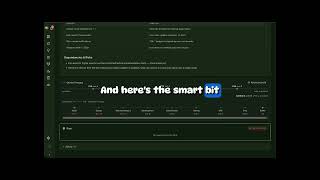
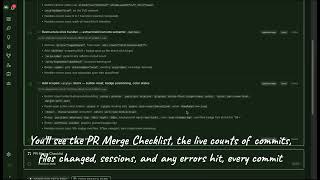
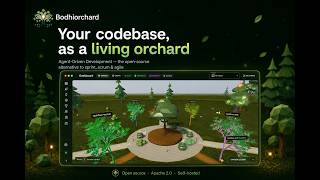
The Living Tree, the BUD board where features move through their lifecycle, and the Feature registry of what shipped.

AI-PERT + Monte Carlo Estimation
Story pointsPlanning poker — replaced by probabilistic, per-phase delivery predictions that improve automatically.

AI generates optimistic, likely, and pessimistic estimates (PERT) for each phase. 10,000 Monte Carlo simulations produce P50/P70/P85 confidence dates. Developer skill profiles, backlog depth, and workload are factored in.

Example Prediction
Feature: Notification Redesign (Complexity: 3/5)
Developer: Alice (backend: 0.92, frontend: 0.35)
Go-live: 70% by Apr 25 | 85% by May 2
PERT Analysis
10K Simulations
Skill-Aware
BUD (Business Understanding Document)

Every feature lives in one BUD — a Business Understanding Document holding the spec, tech spec, test plan, acceptance criteria, and full history. Replaces scattered Jira tickets, Google Docs, and Notion pages.

bud
design
tech_arch
development
testing
uat
prod
closed
Contains spec, tech spec, test plan, acceptance criteria, and metadata
Any stage can return to BUD (e.g., post-deployment bugs)
Bug classification on reopen: "missed feature" vs "development bug"
Full history tracked: stage transitions, assignees, reopens, bugs
Vector-indexed for semantic search by all agents
Smart Quality Loops

Auto-healing bug management that prevents quality debt from accumulating.

Bug Threshold
complexity × multiplier — configurable per org. When exceeded, auto-reassignment triggers.
Auto-Reassignment
Original dev moves to bug review, QA moves to next waiting BUD.
Feature Reopening
External bugs reopen the Feature and restart the flow from triage.
Auto-Classification
Each bug classified as "missed feature" vs "development bug" — drives different fix paths.
Knowledge Capture
Every bug fix adds to the knowledge base — prevents the same bug class from recurring.
Backlog Intelligence

Smart backlog management driven by data, not gut feelings.

Capacity-Aware Triage
Triage Agent deprioritizes or defers items based on real-time team capacity.
Dynamic Reassignment
Reassignment Agent shuffles work based on shifting business demand.
Customer Priority Scoring
ARR + severity + tier drives backlog ordering automatically.
Best-Fit Developer
Skill Agent recommends the best-fit developer for each backlog item.
Real-Time Utilization
Per-developer capacity tracking ensures balanced workloads.
Knowledge That Grows

A 4-layer knowledge architecture that replaces stale wikis with living, auto-synced knowledge.

1
Git Repos
Source code + per-repo CLAUDE.md (syncs every 15 min)
2
Agent Skills
Org standards, design guidelines, API patterns (syncs on change)
3
Central DB
BUDs, enterprise rules, architecture decisions (real-time)
4
Vector Search
Semantic search across everything (auto-indexed)
Why This Beats Confluence
Auto-synced from source — not manually maintained
Semantically searchable — not keyword search
Always current — daily staleness detection
Integrated into agent prompts — agents always have latest context
Dev Skill Maintenance

The Skill Agent rebuilds developer profiles daily — no manual updates, no stale resumes.

Daily Profile Rebuilds
Analyzes git history, BUD assignments, and bug fixes to build skill scores (0–1.0) per module.
Bus Factor Alerts
Detects modules touched by only one person — flags knowledge concentration risk.
Assignment Recommendations
Recommends developers for new BUDs based on expertise match + available capacity.
Evolving Skills
Skills grow automatically as developers contribute — no manual profile updates needed.
The gamification layer

The Skill Agent rebuilds developer profiles nightly. Skills compound, badges unlock, and the leaderboard reflects what people shipped — not how many tickets they touched.

The Living Tree: your org as a tended orchard.

More walkthroughs

Explore it for yourself

Get started on GitHub